
This week I updated DwellClick for the first time in more than 10 years. It now supports the latest macOS and Apple silicon, and can be built and maintained with modern Xcode tools. I have re-licensed it under Apache 2.0 and published the source code. I also gave DwellClick’s homepage a refresh.
Check out the updated homepage for all you need to know about DwellClick 2.3. The rest of this post will be story time.
History of DwellClick
Today I received an email asking me the following question:
if you enjoy writing & have the time, i’m extremely curious about your decision to come back to DwellClick. was it fans like me or your own love for your creation?
So, here goes.
DwellClick was my first Mac app.1 I created it for myself to use. At the time, I was suffering quite badly from repetitive strain injury (RSI) in my wrists. Having previously used a tool called RSI Guard on Windows, I looked for something similar for the Mac. I found one called ClickNoMo that was available to buy for $29. But it was for PowerPC processors only and appeared to be no longer maintained.
I was getting into the idea of developing Mac apps and thought, “how hard can it be to make a dwell clicking app for myself?” So I did it, and then it seemed natural to try and sell it. I had recently quit a “proper” job and wanted to become an independent Mac developer. So, this would be my first attempt at bringing a viable product to market.
I spent the first half of 2010 working on DwellClick 1.0. By August, I was ready to release my creation to the world. I made a product homepage and set up a store to sell license keys via FastSpring.
At the time, there was no Mac App Store, but Apple had a prominent page for Mac app downloads on its website. I submitted DwellClick for consideration and went to the cinema. When I came back, I saw that it had been published — and not only that, featured on the front page!
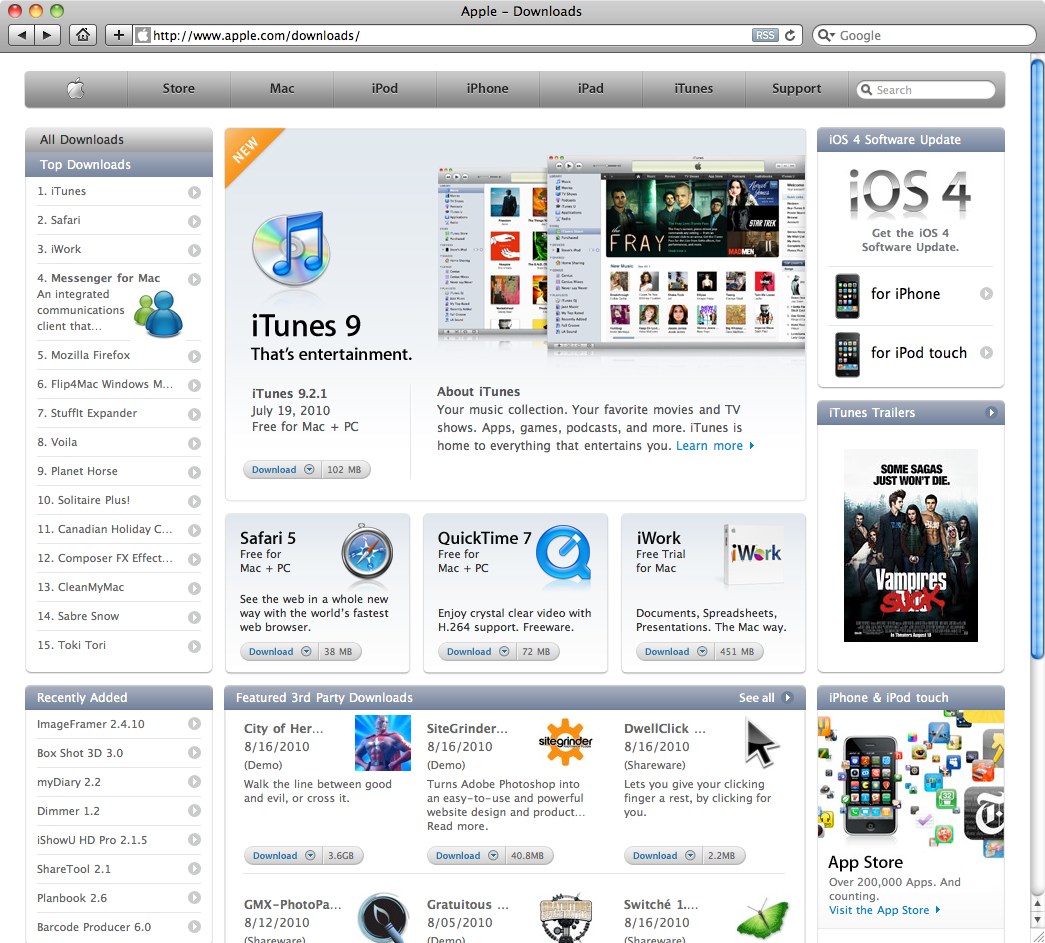
Two days later, I made my first sale. I received a notification email telling me that somebody in the Netherlands had bought a DwellClick license for $9.95. I ran downstairs exclaiming my joy to my parents. It was an amazing feeling knowing that somebody had paid actual money for something I had made!
Back in the day, DwellClick had a website like this:
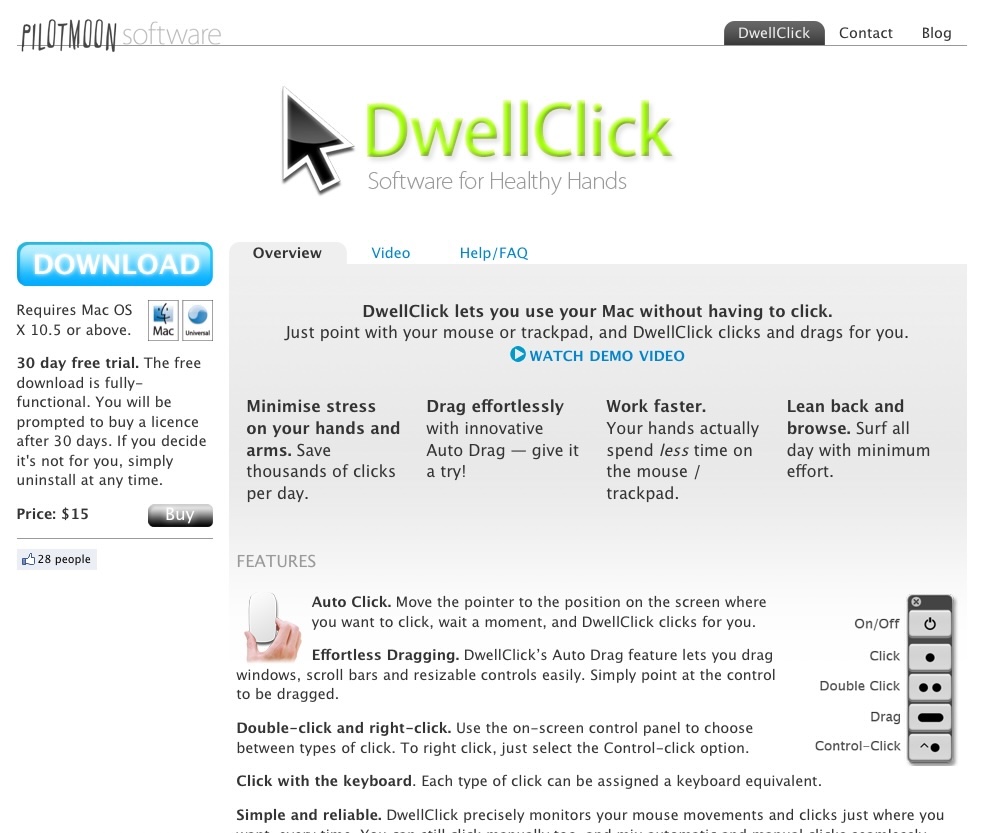
As you can see, the sales pitch was very much focused around “healthy hands” and RSI. I later discovered that many users were not using their hands to move the pointer at all, and that DwellClick had become favoured by quadriplegic users with head and eye trackers.
Despite my efforts, including a big 2.0 release, DwellClick’s sales stayed relatively small. Certainly not enough to make a living from. I realised that it was likely to remain a niche product. I moved on to other app ideas but maintained DwellClick in the background.
I was also able to overcome my own RSI and stopped needing to use it myself.
As a result, DwellClick began to languish. I last updated it in 2016 and subsequently “retired” it in January 2023 when I replaced the DwellClick home page with a grim message:
[…] Whilst the app still works OK on the latest version of macOS (Ventura), the codebase is now so old as to be unmaintainable. I have decided to officially retire the app. This means I have no plans to further develop the app and I will not be releasing any more updates or fixes.
I am no longer selling new licenses for DwellClick and it is no longer available on the Mac App Store. For anyone who wishes to use the last released version, I have made a license key freely available […]
At the time, I needed to focus my energy on PopClip, which I was now making my living from. Retiring DwellClick seemed the sensible and honest thing to do. Apple had by this point introduced its native Dwell feature and I pointed users to that as a replacement.
And yet, I would still occasionally receive messages from DwellClick’s users, mostly just thanking me for the app and asking if I had recommendations for alternatives. They told me Apple’s solution wasn’t as nice to use.
Many of these users told me they were disabled and that DwellClick was how they used their computer. Most said they had no plans to abandon it and that they would just keep using it until it stopped working.
Which brings us to the last couple of months, when a notification started appearing on macOS Tahoe 26.4 saying that DwellClick would soon stop working:
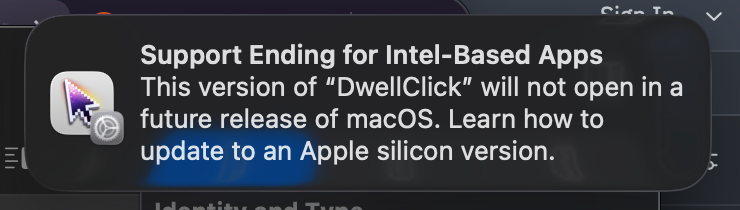
Apple had already announced that macOS Tahoe would be the last release for Intel-based Macs and that Rosetta would be going away too. So DwellClick, being an Intel-only app, would not work in future.
This was enough — along with a few concerned messages from DwellClick users — to get me to pull my finger out, dust off the old source code, and bring DwellClick up to date for Apple silicon. I decided not to make any functional changes, but to keep it exactly as it was. I took the opportunity to fix a few small bugs and give the user interface a lick of paint and dark mode support. But overall, version 2.3 is the same app as version 2.2.4 before it.
I cleaned up the source code and pushed it to GitHub.2 I chose the permissive Apache 2.0 license, the same as I already use for my other open-source app, Scroll Reverser. I also took some time to create a new homepage for DwellClick, put up the full release notes history, and brushed up the user guide.
I’ve already had some nice messages as well as donations to the new Buy Me a Coffee page. Overall, I’m happy that DwellClick sits again as a first-class app in my stable and should live on for some time more.
In summary, the answer to the question is both: the users made it matter, and I still care about the thing I made.
-
Technically, it was my second app. My first one, “RHPNotifier”, showed you in the menu bar it was your turn to play at online chess site Red Hot Pawn. But this app only had 2 users (including me). ↩
-
I don’t intend to turn DwellClick into an “open source project” as such, but the source is there for anyone to do with as they will, in accordance with the license terms. I’m not actively seeking contributions but will consider any reasonable pull requests. ↩
 Pilotmoon Software